Is Mouth Taping for Better Sleep Actually Safe? A Round Rock Dentist’s Honest Answer
If you\u2019ve spent any time on TikTok or Instagram lately, you\u2019ve probably seen the trend: people pressing a small strip of tape over their lips before bed, claiming it\u2019s the secret to better sleep, reduced snoring, and even straighter teeth. Millions of views. Dozens of \u201cbefore and after\u201d videos. And a lot of genuinely confused patients asking their dentist: Should I be doing this?
Red Bud Dental is a family and cosmetic dentistry practice in Round Rock, TX, serving Georgetown, Pflugerville, Cedar Park, and the greater Austin area. Here\u2019s what the science \u2014 and our clinical experience \u2014 actually says about mouth taping.
Where the Trend Came From
The idea isn\u2019t new. Nasal breathing has been promoted for decades in athletic circles and by practitioners of techniques like the Buteyko method. What\u2019s new is the social media packaging: tape over your mouth, breathe through your nose, wake up refreshed. Proponents claim it reduces snoring, eliminates morning dry mouth, improves oxygen uptake, and even changes jaw structure over time.
It spread because it\u2019s cheap, low-effort, and the anecdotal testimonials are compelling. Some people really do feel better after trying it. That part is real. The problem is the explanation \u2014 and the risks that don\u2019t get mentioned in a 60-second video.
What the Research Actually Says
A 2025 systematic review published in PLOS ONE analyzed 10 studies on mouth taping and concluded there is a lack of evidence to support the sweeping health claims circulating online. The reviewers noted that most studies had small sample sizes, no control groups, and short follow-up periods. The review also flagged a specific safety concern: for people with undiagnosed or untreated obstructive sleep apnea, mouth taping can be actively dangerous.
Here\u2019s why. Sleep apnea causes your airway to partially or fully collapse during sleep. Your body\u2019s instinct is to open your mouth to compensate. If you tape your mouth shut and your nasal passages are congested or obstructed \u2014 or if you have significant apnea \u2014 you\u2019ve just restricted your only remaining airway. That\u2019s not a minor inconvenience. That\u2019s a real risk.
The Dental Side of This Debate
What is well-established is that chronic mouth breathing is genuinely bad for your teeth and gums. When you breathe through your mouth at night, saliva evaporates faster. Saliva isn\u2019t just moisture \u2014 it\u2019s your mouth\u2019s primary defense system. It neutralizes acid, remineralizes enamel, and keeps bacteria in check. Without enough of it, cavity risk goes up. Gum tissue dries out and becomes inflamed. Morning breath gets worse, not because of digestion, but because bacterial overgrowth accelerates in a dry environment.
We see this regularly in Round Rock patients who are mouth breathers. Their gum line tends to show more plaque accumulation along the upper front teeth \u2014 exactly where dry air hits first. Their enamel is often more eroded. And they\u2019re frequently surprised that the problem isn\u2019t their brushing habits \u2014 it\u2019s airway and breathing patterns they\u2019ve never had anyone address.
So if mouth taping genuinely trains someone to breathe nasally and it works safely for them, the dental logic makes sense. Nasal breathing preserves saliva. Saliva protects teeth. The issue is whether taping is the right solution \u2014 and whether it\u2019s safe for that specific person.
Who Should Not Try Mouth Taping
The short answer: if you haven\u2019t been screened for sleep apnea, don\u2019t tape your mouth shut at night. Full stop.
You should also avoid it if you have:
- Chronic nasal congestion, deviated septum, or frequent sinus issues
- Any history of snoring that has been described as gasping, choking, or stopping
- High blood pressure or cardiovascular concerns
- Anxiety disorders (waking up with your mouth taped can be alarming)
In the Austin area, summer allergies alone can make nasal breathing difficult for months at a time. Adding tape to that equation isn\u2019t a biohack \u2014 it\u2019s a bad idea.
What We Recommend Instead
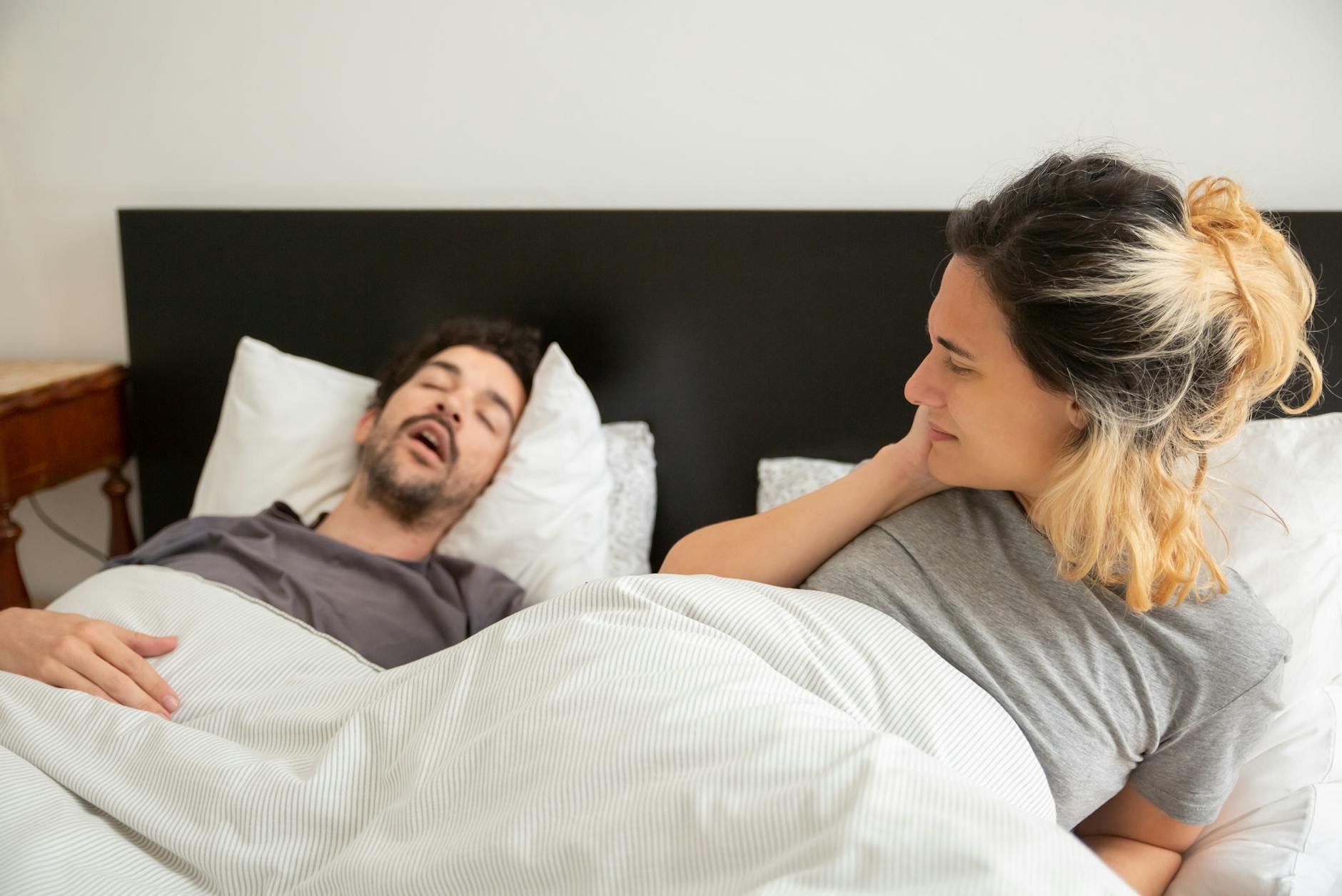
If you\u2019re waking up with a dry mouth, a sore throat, or your partner is complaining about snoring, those symptoms deserve a proper evaluation \u2014 not a strip of tape.
At Red Bud Dental, we start with a conversation about your sleep history and airway. We screen for signs of bruxism (teeth grinding, which often accompanies sleep-disordered breathing), wear patterns that suggest mouth breathing, and tissue changes around the gum line. If sleep apnea is suspected, we refer to a sleep specialist for a proper study. If mild snoring or mouth breathing is confirmed, there are FDA-cleared oral appliances that gently reposition the jaw to keep the airway open \u2014 a far safer intervention than tape.
For patients who simply want to address dry mouth, we recommend staying well hydrated before bed, using a humidifier (especially during dry Central Texas winters), and asking us about prescription-strength fluoride or xylitol products that protect enamel overnight. These are evidence-based. The tape is not.
The Bottom Line
Mouth taping might be harmless for a small subset of people \u2014 healthy adults with no sleep-disordered breathing, clear nasal passages, and no obstructive anatomy. For everyone else, it\u2019s an unproven trend with real downside risk. The fact that it went viral doesn\u2019t make it medicine.
If you\u2019re waking up exhausted, snoring, or dealing with persistent dry mouth, come in and let\u2019s figure out what\u2019s actually going on. There are real solutions for these problems. We\u2019d rather find the right one for you than have you find out the hard way that a trend didn\u2019t apply to your situation.
Schedule your appointment online at book.modento.io/redbuddental \u2014 same-week appointments usually available for Round Rock, Georgetown, Pflugerville, and Cedar Park patients.
Frequently Asked Questions
Is mouth taping safe to try at home for better sleep?
It depends on your health history. For people without sleep apnea or nasal obstruction, it may be low-risk. But if you snore, wake up gasping, or haven\u2019t been screened for sleep apnea, taping your mouth shut at night can restrict airflow and worsen an undiagnosed condition. At our Round Rock office, we always recommend a proper airway screening before trying any at-home sleep interventions.
How does mouth breathing affect my teeth?
Chronic mouth breathing dries out saliva, which is your teeth\u2019s main defense against bacteria and acid. Without enough saliva, cavity risk goes up significantly, gums become inflamed, and enamel erodes faster. We see this pattern regularly in mouth-breathing patients \u2014 it\u2019s one of the first things we look for during exams at our Round Rock practice.
What should I do if I wake up with a dry mouth every morning?
Morning dry mouth is a common sign of mouth breathing or sleep apnea, and it deserves a real evaluation rather than a quick fix. We can review your sleep history, check for signs of bruxism and airway issues, and refer you to a sleep specialist if needed. In the meantime, staying hydrated before bed and using a bedroom humidifier can help. Serving Round Rock, Georgetown, and Pflugerville \u2014 we\u2019re easy to reach for a consultation.
Can a dentist actually help with snoring?
Yes. If snoring is related to jaw position or a partially obstructed airway, dentists can fit custom oral appliances that gently reposition the lower jaw during sleep to keep the airway open. This is an FDA-cleared approach for mild to moderate sleep apnea and snoring. It\u2019s not appropriate for everyone, which is why we screen carefully first \u2014 but for the right patients, it\u2019s a comfortable, effective alternative to a CPAP machine.